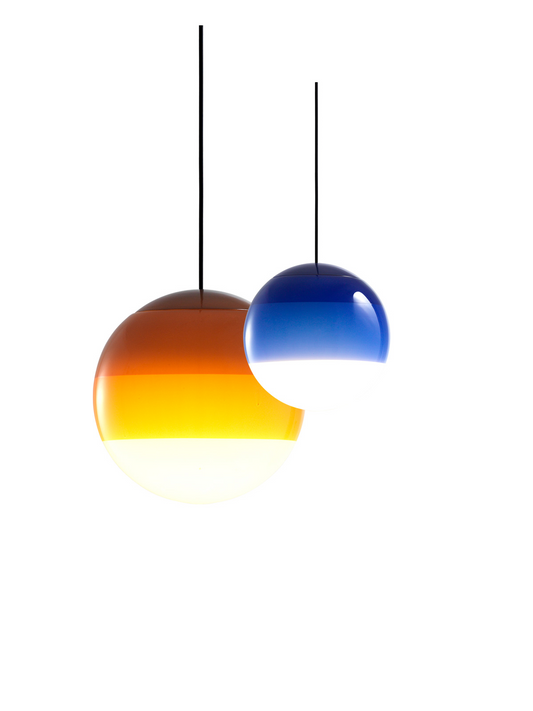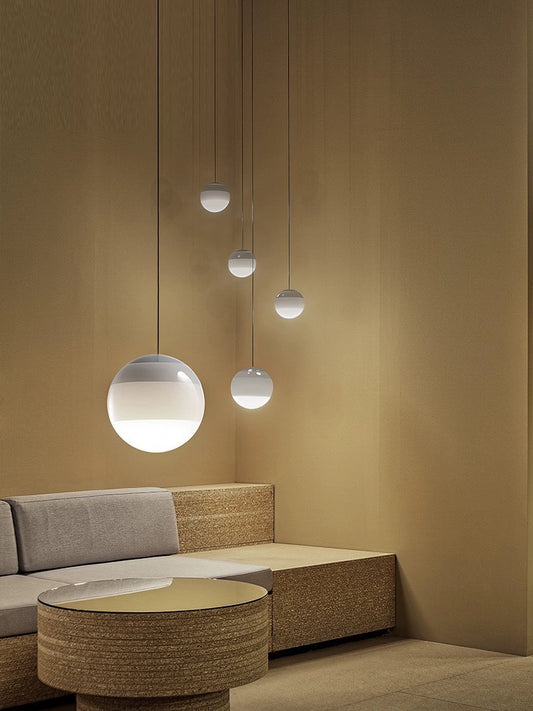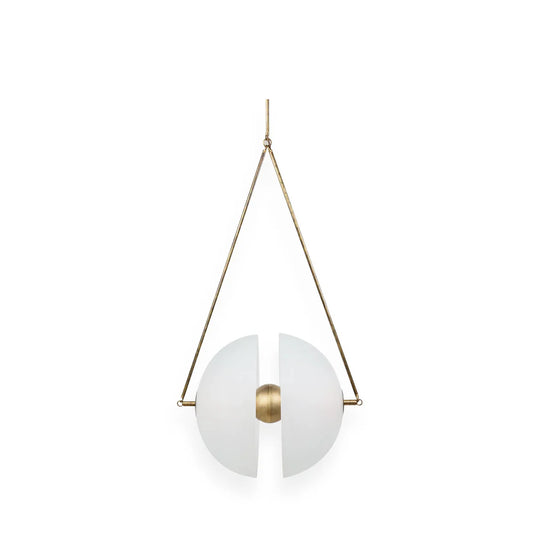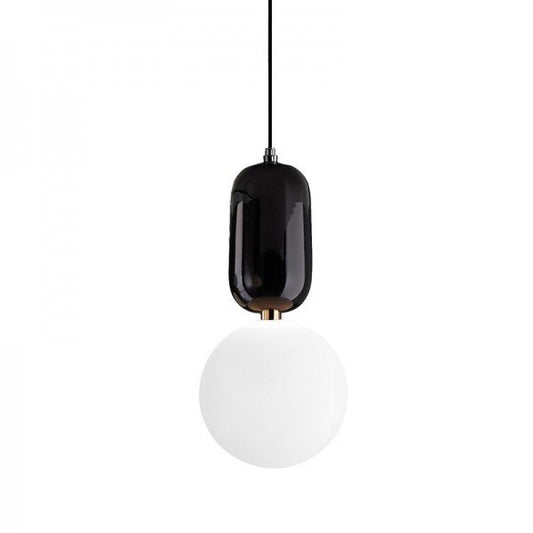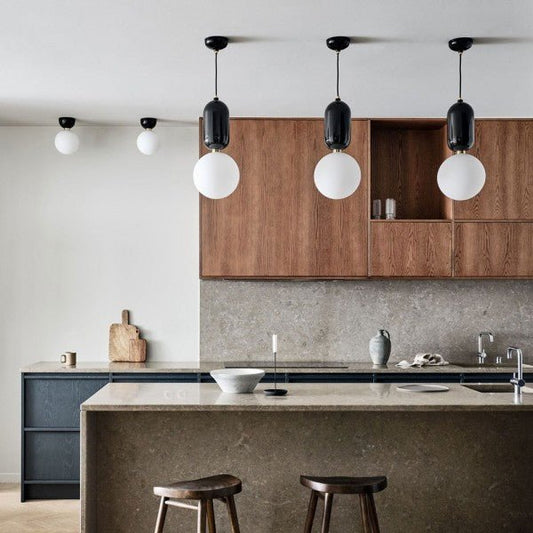

The Apera is defined by its unique contrast: a dark, sleek upper section (often black or deep charcoal) that transitions into a warm, amber or tinted-brown bottom. The dense horizontal stripes etched into the glass catch the light, creating a rhythmic shimmer that mimics the appearance of fine pottery. It is the premier choice for "Warm Minimalist" interiors that require a fixture with high-end textural detail.
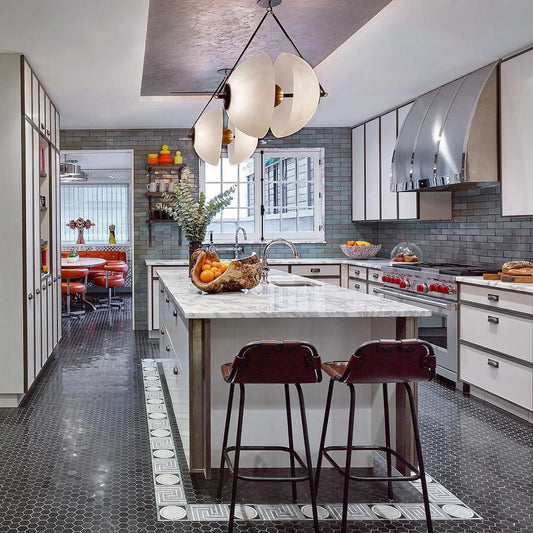
In the market, it is frequently used to add warmth and "visual weight" to minimalist kitchens and cozy dining nooks.
Bi-Color Artistry & Modular Shapes
Dual-Tone Glass Finish: The signature "Apera" look features a hand-painted or tinted gradient. The top section is opaque or deeply smoked, while the bottom is translucent amber, allowing for a focused downward beam and a soft, horizontal ambient glow.
Three Distinct Silhouettes: As part of the "Bespoken Series," the Apera is available in three modular designs (A, B, and C). These vary from slender, elongated tubes to wide, flattened discs, allowing for custom "Cluster Installations."
Refractive Ribbing: Unlike smooth glass pendants, the Apera features "Dense Stripes." These horizontal ridges diffuse the light source, eliminating harsh glares and casting a soft, striped texture across nearby walls.
Flexible Suspension: Comes standard with a 100cm (39") adjustable wire, though Malane offers extended drops for double-height foyers or commercial bar setups.
Designer Tips
The "Bar Cluster": For a modern kitchen island, hang a staggered trio using one of each design (A, B, and C). The varying silhouettes create a dynamic architectural profile that keeps the island from feeling too symmetrical.
The "Warm Glow" Nook: Use the Design B pendant in an amber finish over a wooden reading table or bedside. The amber glass naturally shifts the color temperature of any bulb toward a warmer, more relaxing hue (approx. 2400K).
Textural Contrast: "Scandinavian-Industrial" homes, pair the matte black hardware of the Apera with light-colored concrete or raw oak surfaces. The horizontal stripes of the lamp act as a graphic bridge between these two disparate textures.