
E12 vs E14 Bulb: What's the Difference and Are They Interchangeable?
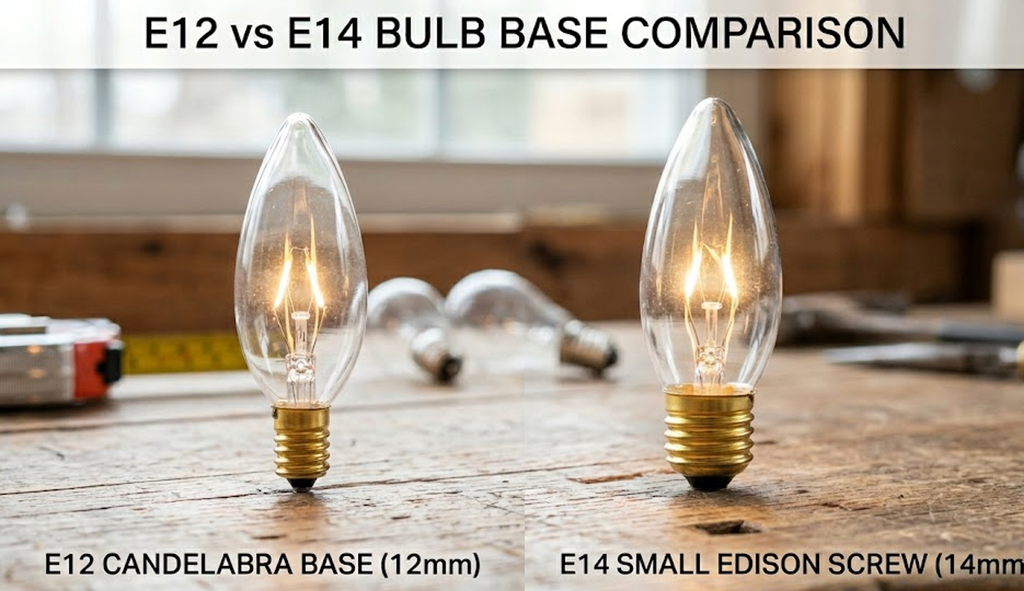
Quick answer: E12 and E14 are both small candelabra bulb bases, but they are not interchangeable. E12 is a North American standard with a 12mm diameter base; E14 is a European standard with a 14mm diameter base. The 2mm difference means an E12 bulb will not fit securely in an E14 socket, and an E14 bulb will not fit into an E12 socket. Always check your lamp’s socket specification before buying replacement bulbs.
What Do E12 and E14 Mean?
The “E” stands for Edison screw — the threaded base system invented by Thomas Edison that remains the global standard for most light bulbs. The number refers to the diameter of the screw base in millimetres. So E12 has a 12mm base diameter, and E14 has a 14mm base diameter.
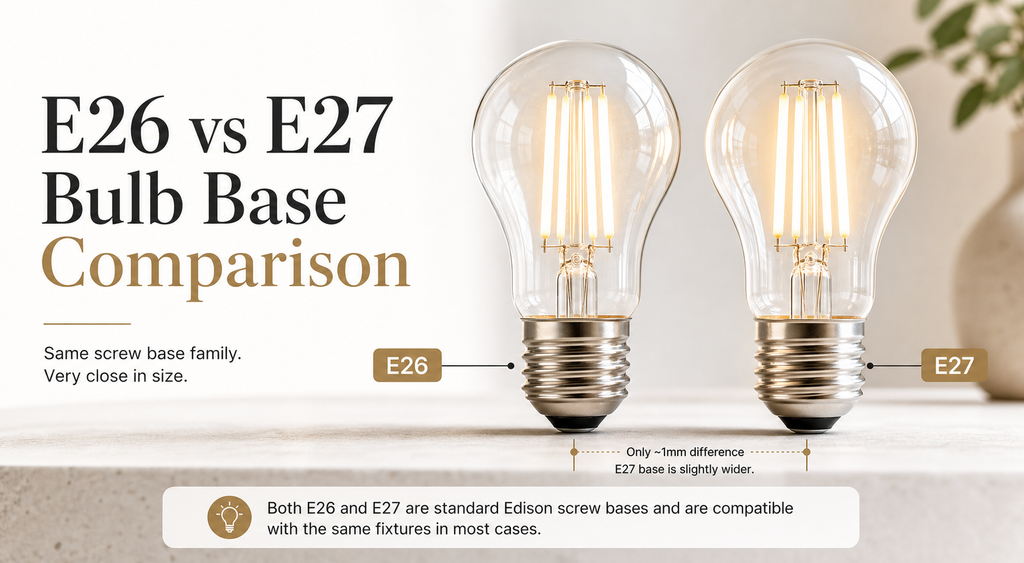
Both are considered “small Edison screw” or candelabra bases, and they serve similar roles: they are used in decorative lamps, candelabra fixtures, table lamps, wall sconces, and small pendant lights where the full-size E26 or E27 base would be too large. Because they look nearly identical at a glance, they are frequently confused — but the 2mm difference in diameter makes them incompatible.
E12 vs E14: Key Differences
| Feature | E12 | E14 |
|---|---|---|
| Base diameter | 12mm | 14mm |
| Standard region | North America | Europe, UK, Australia |
| Common name | Candelabra base | Small Edison screw (SES) |
| Interchangeable? | No — not compatible with each other | |
| Typical wattage (LED) | 2W–7W | 2W–7W |
| Typical use | Chandeliers, candelabra fixtures, decorative lamps | Table lamps, wall sconces, small pendants, European fixtures |
Are E12 and E14 Interchangeable?
No — they are not interchangeable. The 2mm difference in base diameter means:
- An E12 bulb inserted into an E14 socket will have a loose fit and may not make reliable electrical contact. It may light intermittently or fail to light at all, and presents a safety risk.
- An E14 bulb inserted into an E12 socket will not thread in at all — the base is too wide to engage with the socket threads.
If you are unsure which base your fixture uses, do not try to force a bulb in. Instead, check the lamp’s specification label (usually found inside the shade or on the base of the fitting), or use a bulb base gauge to measure the existing bulb.
How to Tell Whether You Have an E12 or E14 Socket
Check the existing bulb
If there is already a bulb in the fixture, look for a code printed on the bulb’s base or glass. E12 or E14 will usually appear alongside the wattage and voltage information. If no code is visible, measure the base diameter with a ruler — 12mm for E12, 14mm for E14.
Check the lamp’s specification
Most lamps have a compliance label inside the shade or on the base that specifies the socket type and maximum wattage. Look for “E12 MAX 40W” or “E14 MAX 40W” (or the LED equivalent).
Check your location
If you purchased the lamp in North America, it almost certainly uses E12. If the lamp is European in origin or was purchased in the UK, Europe, or Australia, it almost certainly uses E14. This is not a definitive check — some imported fixtures use non-regional standards — but it narrows down the answer quickly.
What Bulb Shapes Work with E12 and E14?
Both E12 and E14 bases are available in a range of bulb shapes. The base size does not limit the shape of the bulb above it — only the socket it fits into.
- Candelabra / torpedo shape — the classic tapered flame shape for chandelier arms and candelabra fixtures
- Globe (G14, G16, G25) — round globes that suit pendant lights and exposed-bulb fixtures
- Standard A-shape — the conventional bulb silhouette in a smaller size
- Edison / vintage filament — teardrop, squirrel cage, or tubular shapes with visible filament, ideal for decorative exposed-bulb use
E12 and E14 in Specific Fixtures
Chandeliers
Multi-arm chandeliers almost always use small-base bulbs so that the candle sleeves over the socket look proportional. North American chandeliers use E12; European chandeliers use E14. When buying replacement bulbs for a chandelier, always verify the base size before purchasing — buying 12 incorrect bulbs is a frustrating and avoidable mistake.
Wall sconces
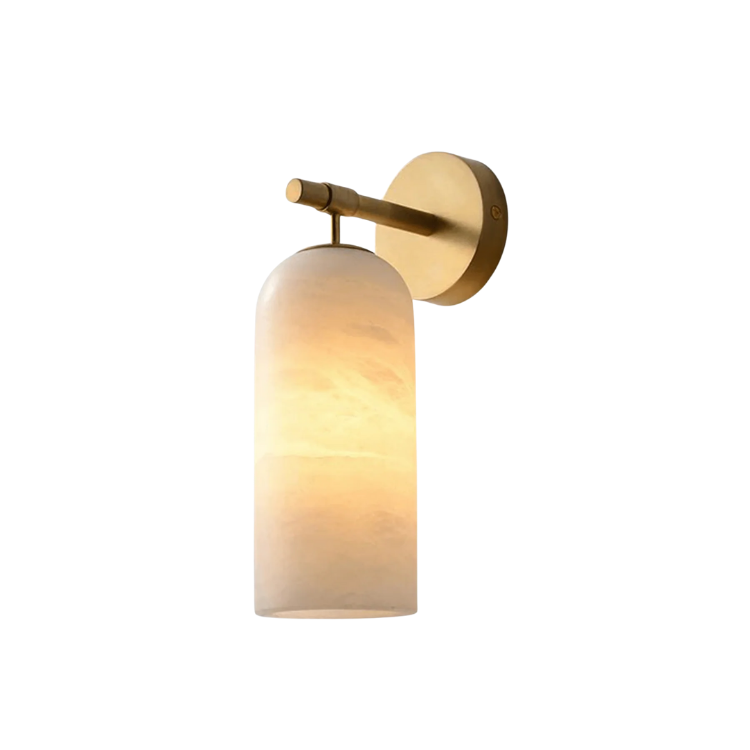
Decorative wall sconces with exposed or semi-exposed bulbs commonly use E12 (US) or E14 (EU). In small shaded sconces, a candelabra or teardrop bulb fits cleanly within the shade profile; in exposed designs, a globe or Edison-style bulb enhances the decorative quality.
Table and floor lamps
Smaller table lamps and accent lamps — particularly those with narrow or ornate shades — often use E12 or E14 bases. Full-size floor lamps and larger table lamps typically use the larger E26 (US) or E27 (EU) base.
Can I Convert an E12 Fixture to E14 or Vice Versa?
Socket adapters are available that allow an E14 bulb to be used in an E12 fixture, and vice versa. These adapters thread into the existing socket and provide the alternative base in the other size. They are a useful solution if you have a stock of bulbs in the wrong size, but they add length to the bulb assembly and may affect the appearance of the fixture. For permanent fixtures, it is usually cleaner to simply use the correct bulb size.
Frequently Asked Questions
Which is more common in the US — E12 or E14?
E12 is the North American candelabra standard. Most US chandeliers, sconces, and decorative lamps use E12. E14 bulbs are widely available in the US but are most commonly found in imported European fixtures.
Can I use an LED bulb in an E12 or E14 socket?
Yes — LED versions of both E12 and E14 bulbs are widely available and are the recommended choice. They run cooler, use far less energy, and last significantly longer than incandescent equivalents. For decorative fixtures with visible bulbs, look for LED filament versions that replicate the warm glow of traditional incandescent bulbs while consuming a fraction of the energy.
What wattage should I use for E12 or E14 bulbs?
For LED bulbs, 2–7W is the typical range for E12 and E14 fixtures. This is equivalent to 20–60W incandescent in light output. Always check the maximum wattage stated on your fixture and stay within that limit — this is especially important for enclosed or fabric-shaded fittings where heat can accumulate.
What colour temperature is best for E12 and E14 bulbs?
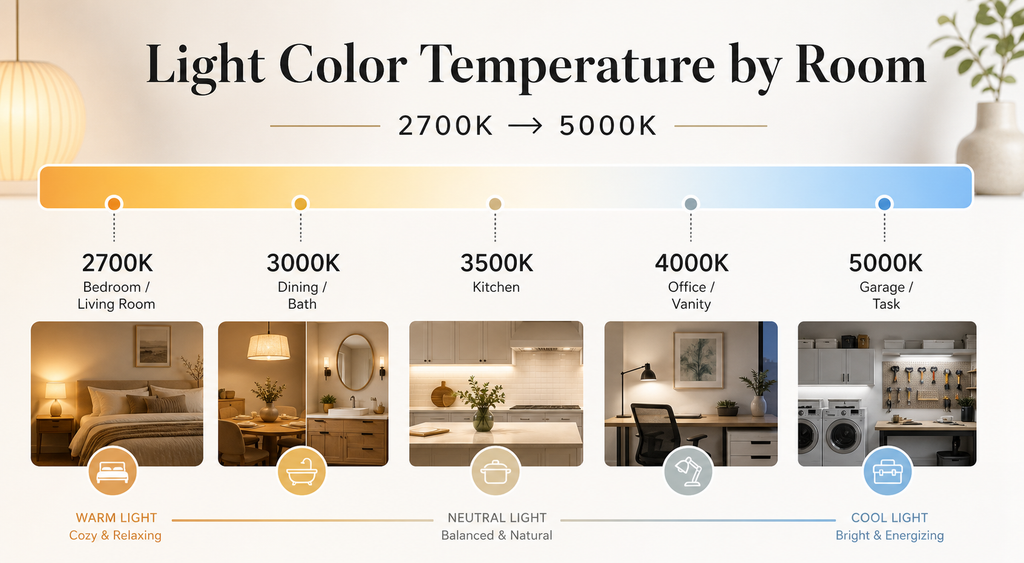
For most decorative applications — chandeliers, sconces, and table lamps — a warm white LED at 2700K–3000K is ideal. This colour temperature produces the warm, inviting glow associated with traditional incandescent lighting. Avoid cool white (4000K+) in decorative fixtures where the warm character of the shade material or fitting would be undermined by cooler light.
Are E12 and E14 bulbs easy to find?
Both are widely available from lighting retailers, hardware stores, and online. E12 is easier to find in North America; E14 is more readily available in Europe and the UK. When buying in quantity for a multi-arm chandelier, it is worth purchasing a few extra bulbs at the same time so replacements are on hand when needed.