
E26 vs E27 Bulbs: What's the Difference and Are They Interchangeable?
If you've ever shopped for a light bulb or a new fixture, you've probably seen the codes "E26" and "E27" and wondered whether they're the same thing — and whether you can swap one for the other. The short answer: they're almost identical, and in most home fixtures they're interchangeable. Here's exactly what the difference is and when it actually matters.
The short answer
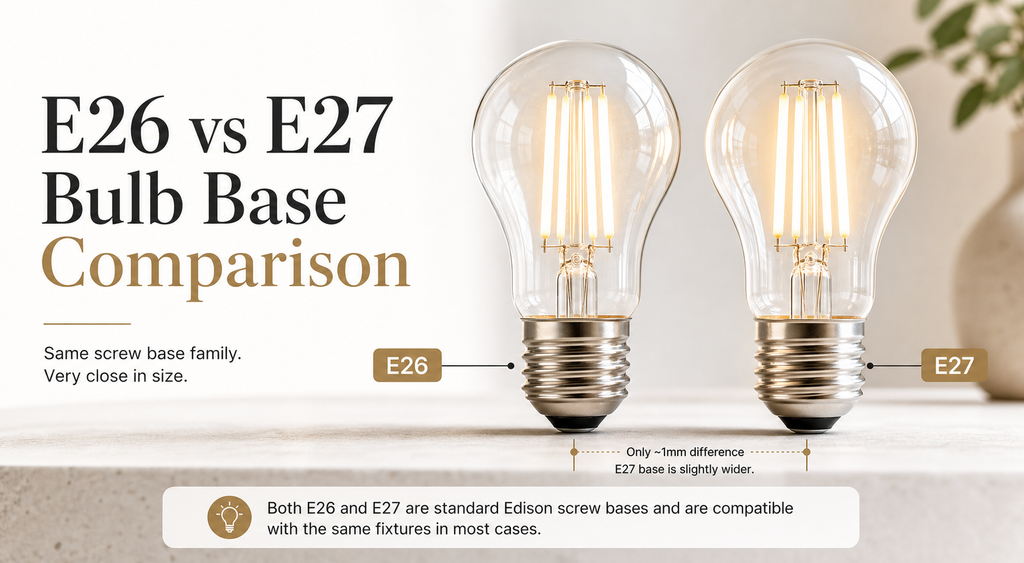
E26 and E27 are both screw-in ("Edison") bulb bases, and they're nearly the same size. E26 is the standard in the United States, and E27 is the standard in Europe and much of the world. They thread into the same sockets, so physically they're interchangeable. The only thing you really need to match is voltage — not the base.
What "E26" and "E27" actually mean
The letter and number are simply a measurement:
- "E" stands for Edison screw — the spiral, twist-in base invented by Thomas Edison.
- The number is the base diameter in millimeters.
So an E26 bulb has a base 26 mm wide, and an E27 bulb is 27 mm wide. That's a 1-millimeter difference — far too small to see or feel, which is why the two are treated as interchangeable in everyday use.
Are E26 and E27 bulbs interchangeable?
Physically, yes. An E27 bulb will screw into an E26 socket, and an E26 bulb will screw into an E27 socket. The threads line up fine.
What you do need to check is the voltage rating:
- In the United States, household power is 120V, so you want bulbs rated for 120V (or a dual-voltage bulb rated 110–240V).
- In Europe and most other regions, power is 220–240V.
Putting a bulb of the wrong voltage into a socket can cause it to burn out fast or not work safely — so always match the bulb's voltage to your home's supply. Most modern LED bulbs are rated for a wide range (110–240V), which makes this easy.
Which base do I have? (For US homeowners)
If you bought your lamp or fixture in the United States, it almost certainly uses an E26 base. If you're shopping for an imported or designer fixture, the listing might say E27 — but many of these ship with US-compatible wiring. The thing to look for is the voltage rating on the product page (a range like 110–240V means it's ready for US outlets).
E26 vs E27 at a glance
| E26 | E27 | |
|---|---|---|
| Base diameter | 26 mm | 27 mm |
| Standard region | North America (US, Canada) | Europe & international |
| Typical voltage | 120V | 220–240V |
| Base type | Edison screw (medium) | Edison screw |
| Physically interchangeable? | Yes | Yes |
How to choose the right bulb
- Match the voltage to your country — 120V for the US, or a 110–240V dual-voltage LED to be safe.
- Don't worry about the 1 mm — E26 and E27 will both fit.
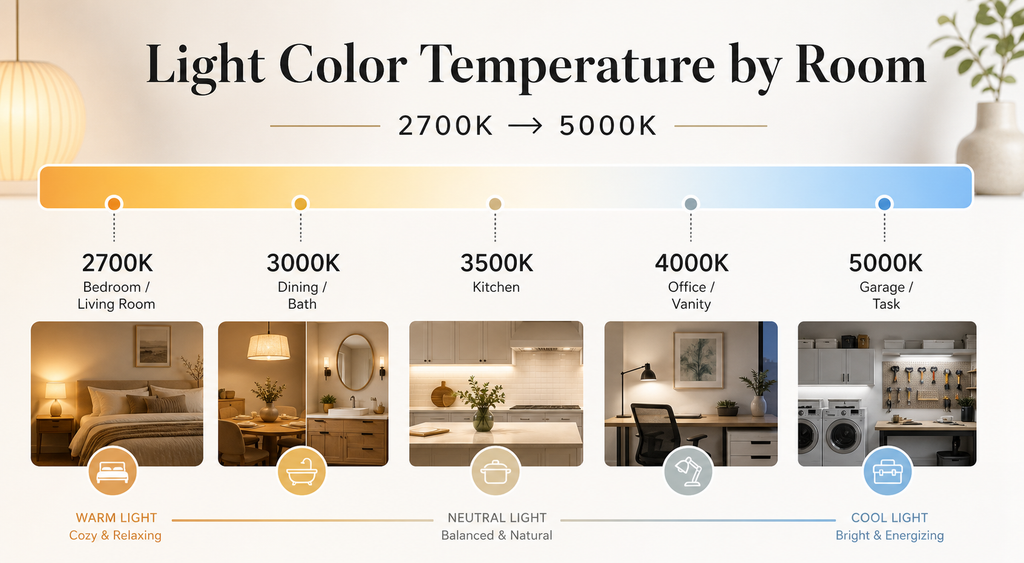
- Pick your color temperature — warm white (2700–3000K) for cozy living rooms and bedrooms; cooler (4000K+) for task areas like kitchens.
- Check the wattage limit of your fixture and choose an LED that stays under it.
Fixtures that use standard E26 / E27 bulbs
Most of our designer lighting uses easy-to-find E26/E27 bulbs, so you can use the LED or Edison bulb of your choice:
- Rice Paper Pendant Lamp — soft, diffused light in five sizes (E26/E27).
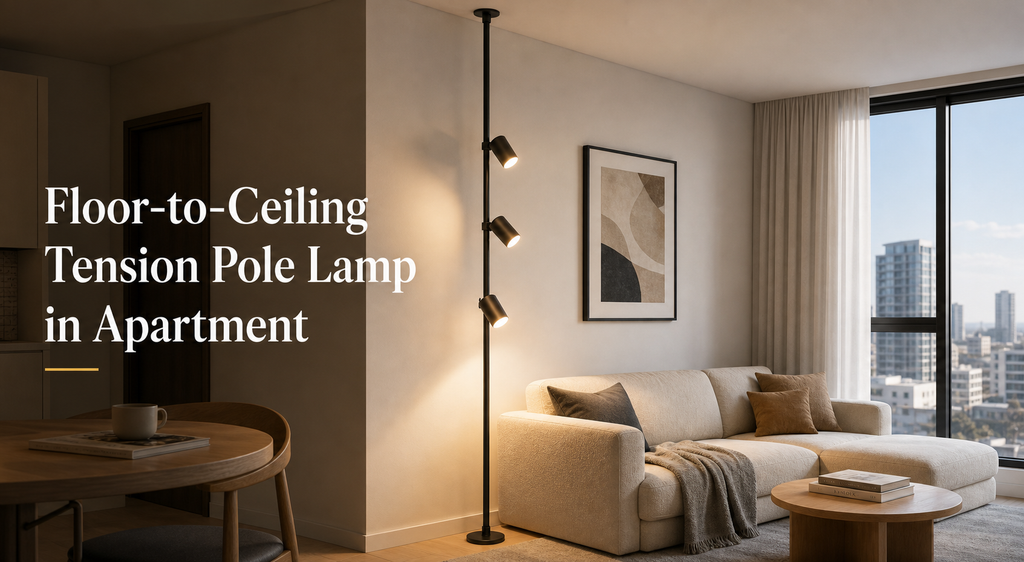
- Zuru Floor to Ceiling Lamp — a tension-mounted pole light for high ceilings (E27).
The bottom line
For US homes, go with E26 — or an E27 bulb rated 110–240V, which works just the same. The base will fit either way; the rule to remember is simple: match the voltage, not the millimeter.
Still deciding between bulb bases? Read our companion guide: E12 vs E14 Bulb: What's the Difference and Are They Interchangeable?
FAQ (add as a separate section, and ideally mark up with FAQ schema):
Can I put an E27 bulb in an E26 socket? Yes. They thread together fine — just make sure the bulb's voltage matches your home's supply (120V in the US).
Is E26 the same as a "standard" or "medium" base? Yes. "E26," "standard base," and "medium base" all refer to the common US screw-in bulb.
What voltage are E26 bulbs? In the US, E26 bulbs are typically rated for 120V. Many LED bulbs are dual-voltage (110–240V).
Is E27 a European bulb? E27 is the standard screw base in Europe and most of the world, usually rated for 220–240V — but E27-labeled fixtures sold in the US often accept 110–240V bulbs.